
Opening a closet with little more than a hanging rod and an empty floor can make organization feel almost impossible. There may technically be plenty of space inside, but without shelves, drawers, or other built-in storage, much of that space goes unused.
Fortunately, you don't need an expensive custom closet system to fix the problem.
Freestanding organizers, stackable storage, hanging solutions, and a few smart organization techniques can transform an empty closet into a much more functional space. Better yet, many of these ideas don't require permanent modifications, making them useful for renters as well.
Here's how to organize a closet without built-in storage and make better use of the space you already have.
Top Picks (Quick Links)
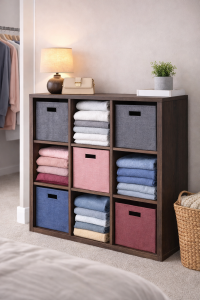
Cube Organizer
Best for: Creating instant shelf-style storage
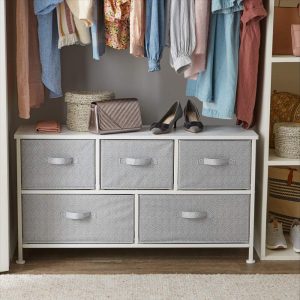
5-Drawer Closet Organizer
Best for: Adding compact drawer storage
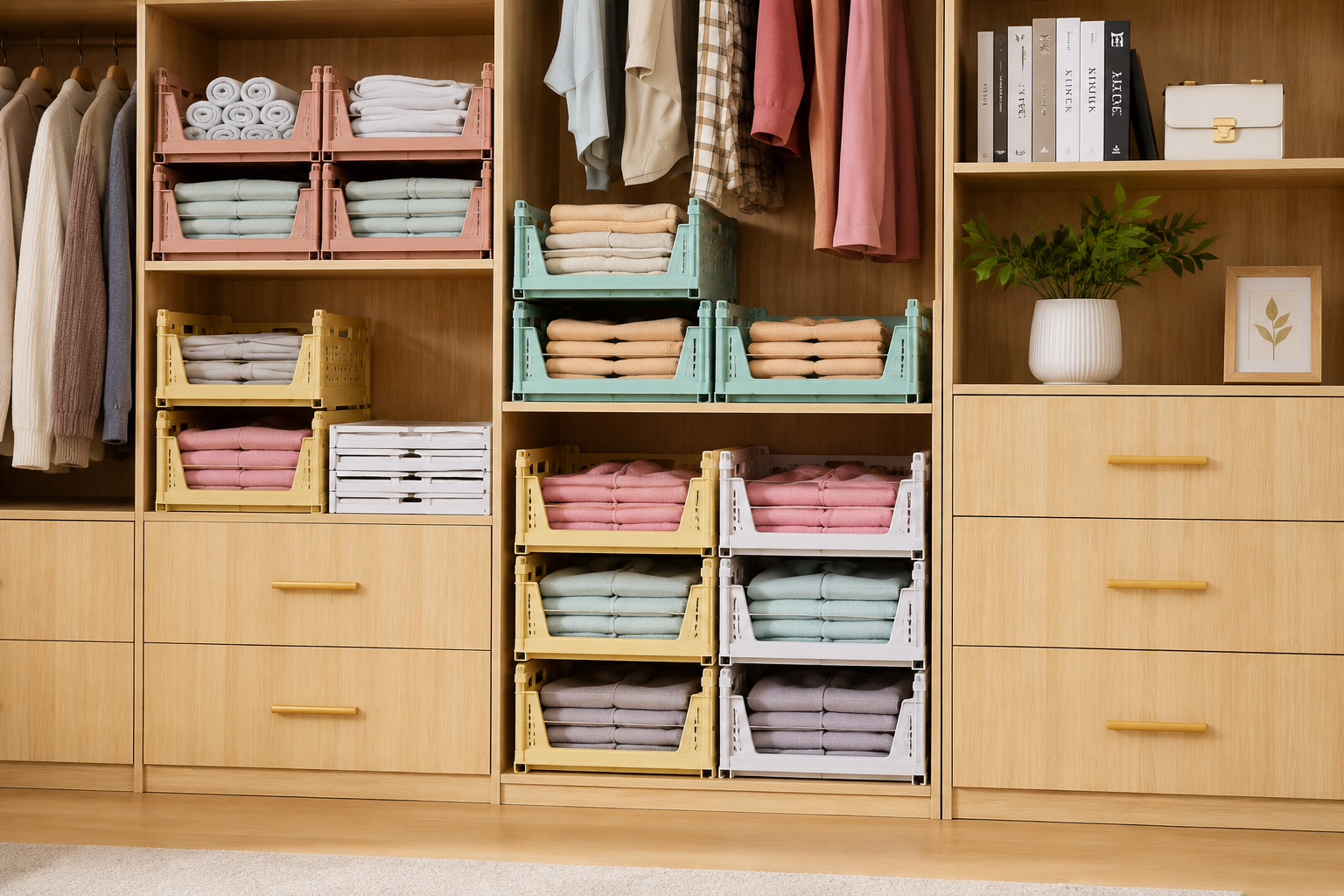
Stackable Storage Baskets
Best for: Taking advantage of vertical space
If your closet doesn't have traditional shelving, start with our Closet Storage Ideas Without Shelves guide for even more ways to create usable storage without remodeling.
1. Start With an Empty Closet
Before adding organizers, take everything out.
It may feel unnecessary, but an empty closet makes it much easier to see what you're actually working with.
Look for:
- Empty floor space
- Space beneath shorter hanging clothes
- Unused vertical space
- Empty corners
- Space above the hanging rod
- Usable door space
A closet that looks tiny when packed with clothes can have considerably more potential once it's empty.
2. Create Your Own Shelving With a Cube Organizer
If the closet doesn't have shelves, one of the easiest solutions is to add freestanding storage.
A Cube Organizer essentially creates a shelving system without requiring built-in construction.
Individual cubes can hold:
- Folded shirts
- Jeans
- Sweaters
- Handbags
- Shoes
- Storage bins
- Accessories
You can also assign each cube a specific category, which helps prevent everything from becoming one large pile.
View Cube Organizer on Amazon →
3. Put the Space Under Hanging Clothes to Work
This is one of the biggest missed opportunities in closets without built-ins.
If shirts and jackets hang from a standard clothing rod, there may be several feet of empty space underneath them.
Instead of leaving that area unused, add a compact 5-Drawer Closet Organizer.
The drawers can hold smaller items such as:
- Socks
- Underwear
- T-shirts
- Shorts
- Workout clothes
- Accessories
This can provide dresser-style storage without taking up additional space elsewhere in the bedroom.
View 5-Drawer Closet Organizer on Amazon →
For more ways to use overlooked closet areas, read How to Make More Room in a Small Closet: 10 Easy Ways.
4. Build Up Instead of Out
When floor space is limited, look upward.
Stackable storage allows multiple categories to occupy the same footprint.
For example, Stackable Storage Baskets could create separate areas for:
Basket 1: Workout clothing
Basket 2: Accessories
Basket 3: Bags
Basket 4: Seasonal items
Instead of four containers taking up floor space next to one another, they can make better use of the closet's height.
View Stackable Storage Baskets on Amazon →
5. Create Storage Zones
Built-in closets naturally divide belongings into different sections.
Without those sections, you need to create them yourself.
A simple layout might look like this:
Hanging Zone
Shirts, dresses, jackets, and other garments that should remain on hangers.
Drawer Zone
Socks, underwear, shorts, and smaller folded clothing.
Shelf Zone
Sweaters, jeans, bags, and larger folded items.
Floor Zone
Shoes and heavier storage.
Seasonal Zone
Clothes and accessories you don't currently need.
Giving everything a designated area makes even a basic closet easier to maintain.
6. Don't Keep Every Piece of Clothing in the Closet
One of the easiest ways to overwhelm a closet without built-ins is expecting it to store your entire wardrobe year-round.
Instead, rotate seasonal clothing.
During warmer months, heavy coats and winter sweaters can move into long-term storage.
When temperatures change, swap them back.
If you're putting clothing away for several months, read our Best Long-Term Clothing Storage Solutions to Protect Your Wardrobe guide before packing everything up.
7. Use the Closet Door When It Makes Sense
The inside of the closet door is another area that often goes unused.
An over-the-door organizer can potentially hold:
- Shoes
- Scarves
- Belts
- Hats
- Small bags
- Accessories
The key is moderation.
Adding too much to the door can make the closet cumbersome, so reserve this area for lightweight items you access regularly.
8. Keep the Floor Organized
An empty closet floor quickly becomes a dumping ground.
Shoes get kicked inside.
Bags pile up.
Boxes get stacked randomly.
Before long, accessing anything at the back becomes difficult.
Instead, decide exactly what belongs on the floor.
For many closets, that might mean:
- Shoes along one section
- A drawer organizer beneath shirts
- Stackable baskets in an empty corner
Everything else should have another designated location.
9. Keep Everyday Items Within Easy Reach
Not every part of your closet is equally valuable.
The easiest areas to reach should contain the belongings you use most frequently.
Try organizing your closet roughly like this:
Easy to reach: Everyday clothing
Lower storage: Shoes and frequently used accessories
Higher storage: Occasional items
Secondary storage: Seasonal clothing
This prevents you from moving storage containers every time you need a shirt.
10. Avoid Turning the Closet Into a Storage Unit
Adding organizers doesn't mean every inch needs to be filled.
This is especially important in closets without built-in storage.
Too many freestanding organizers can make the closet feel even smaller than it did originally.
Start with the storage problems you actually have.
If you need drawers, add drawers.
If you need shelves, add shelving.
If you need accessory storage, add baskets.
Don't buy an organizer simply because there's technically room for one.
Can You Organize a Closet Without Installing Shelves?
Absolutely.
A closet doesn't need permanent shelving to be functional.
Freestanding cube organizers, compact drawers, stackable baskets, hanging organizers, and over-the-door storage can all create dedicated storage areas without major construction.
This approach can be particularly useful for apartments and rental homes where permanent modifications may not be practical.
If you're renting, our Renter-Friendly Closet Storage Ideas guide covers additional ways to organize a closet without making permanent changes.
What Should You Put on the Floor of a Closet Without Shelves?
Prioritize items that make good use of the closet's lower space.
That can include:
- Shoes
- Compact drawers
- Cube organizers
- Stackable baskets
- Heavier storage containers
Avoid using the floor as miscellaneous storage.
Once unrelated items start accumulating there, the closet becomes much harder to maintain.
Frequently Asked Questions
How do you organize a closet that has no built-ins?
Start by creating separate storage zones using freestanding shelving, drawers, baskets, hanging space, and floor storage. Assign each area a specific purpose so belongings don't become mixed together.
What can I use instead of built-in closet shelves?
Cube organizers, freestanding shelves, hanging organizers, stackable baskets, and compact drawer units can all provide additional storage without installing permanent shelving.
How can I organize a closet without drilling?
Look for freestanding, stackable, hanging, or over-the-door storage products that don't need to be attached permanently to the walls.
How do you maximize an empty closet?
Use both horizontal and vertical space. Add storage underneath shorter hanging clothes, utilize the floor intentionally, and take advantage of unused height with stackable organizers.
How do renters add storage to closets?
Freestanding and removable organizers are usually the easiest options because they can be removed when moving and don't require permanent alterations.
Related Closet Organization Guides
Closet Storage Ideas Without Shelves
Renter-Friendly Closet Storage Ideas
Small Closet Organization Ideas That Actually Work
How to Make More Room in a Small Closet: 10 Easy Ways
10 Small Closet Organization Mistakes That Waste Space
Best Long-Term Clothing Storage Solutions to Protect Your Wardrobe
Final Thoughts
A closet without built-in storage isn't necessarily a bad closet.
In some ways, starting with an empty space gives you more flexibility because you can build the organization system around what you actually own.
Start by identifying unused areas. Then create dedicated zones using freestanding shelving, drawers, stackable baskets, and your existing hanging space.
The goal isn't to fill every inch.
It's to turn an empty closet into a storage system that's simple, functional, and easy to maintain.
Affiliate Disclosure
As an Amazon Associate, I earn from qualifying purchases. If you purchase through one of our links, we may earn a commission at no additional cost to you.